FREEPHONE 0800 083 7807

LSPS Ltd
61-70 Harrison Close ,
South Wigston ,
Leicester , LE18 4ZL
Email:

Recycling rate of aluminium cans reaches 70%

cans-fuzzy-drinksAccording to figures released by the Aluminium Packaging Recycling Organisation (Alupro) as many as seven out of every 10 aluminium drinks cans sold in the UK last year were eventually recycled.

The European metal packaging sector is collectively working towards a goal of having 80% of metal packaging recycled by the year 2025, so these latest reports show positive signs that the target will be reached, perhaps even sooner than the target year.

Aluminium is one of the best examples of recyclable materials on the market. It can be reused time and time again without degrading and its production uses just 5% of the energy needed to create metal out of raw materials. In terms of C02 emissions, recycling aluminium again creates just 5% of the C02 produced by making metal from scratch.

While the latest figures are focused on drinks cans, aluminium is used in a variety of other products which can also be recycled at home after being properly prepared for recycling. Foil trays, for instance, are regularly used in ready meals and can be recycled after being given a quick rinse under a tap. Aerosols such as deodorant and hair sprays can also be recycled provided they are not squashed or pierced – just be careful to remove the plastic cap if it is safe and easy to do so. Other examples of commonly used household aluminium products include bottle tops found on wines, alcohol and cooking ingredients like olive oil as well as wrapping used for cakes, sandwiches and other cooking products. While these rules are best practice for most councils, your council may have different guidelines under which they operate, so it is best to seek advice from your local council website.

We take recycling seriously at LSPS. For more information or to find out how we can help with your waste disposal efforts, please visit our website or call us on freephone 0800 083 7807.

UK on track to meet annual recycling targets

silver-jubilee-bridge-suspension-bridge-runcorn-bridge-bridge-53439Figures just released by the National Packaging Waste Database have shown signs that the UK is closing in on targets for the recycling of packaging and will likely meet its quota by the end of 2017.

The latest figures published by the National Packaging Waste Database on behalf of the Environment Agency show that the amount of recycling in the UK has already achieved at least two-thirds of required targets with paper achieving 73% of its quota and wood already reaching 94%. However, the picture looks less promising for Glass and Plastics recycling which lag behind at around 52-54% respectively. The report can be viewed in full here: https://npwd.environment-agency.gov.uk/Public/PublicDEFRAReport.aspx.

Despite the positive indications from wood and paper, some industry figures such as Ecosurety have raised concerns about the levels of plastic recycling, noting that the price of plastic continues to rise, spurred on by the Chinese Government’s plans to ban imports of scrap plastics and unsorted paper waste. As of last year china imported 7.3 million tonnes of waste plastics per annum accounting for over half of the world’s imports and valued at around £2.8billion. Early indications show that China’s clampdown on waste plastics may push the flow of materials into other markets such as India, or may even begin to open up wider trading throughout the UK and Europe rather than relying to heavily on China.

We take recycling seriously at LSPS. For more information or to find out how we can help with your waste disposal efforts, please visit our website or call us on freephone 0800 083 7807.

Interesting tips for reducing household waste

canning-762195_640In a recent article by The Guardian readers sent in some of their best tips for reducing their household waste, inspired by the Australian TV programme War on Waste. Here are a few of our favourites.

One reader uses garden waste instead of bin liners. Instead of using a bin liner to catch liquids and nasty smells from their rubbish they use a layer of garden soil. They simply empty the soil back out into the garden and replace with fresh soil after emptying and sorting their general waste.

Another reader recommended home brewing their own beer. While you may have to wait a little longer than normal to have a drink you can save money and cut down on bottle waste by reusing old bottles for your homebrew.

Rather than using freezer bags one user decided to wrap unwanted food portions in baking paper. This meant less food waste as they could simply store them away in their freezer unit until they needed thawing out for a later meal. Alternatively one couple claimed that they simply gave the large majority of their food waste to their chickens who returned the favour by providing them with the occasional free range egg for breakfast.

One interesting tip recommended was to group certain materials together if you fear they may be too small to recycle. For example, plastic cutlery is often too small to be effectively recycled and may be rejected but if you group it together by placing inside a container or a bottle then it can be processed.

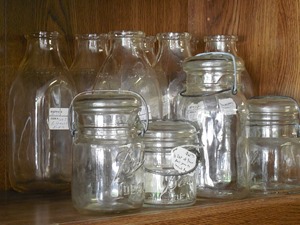
Another genius repurposing of household waste that we discovered was to use jam jars or coffee jars as cups for hot drinks. The glass jars and lids are perfect for storing your drink and a closable lid means no spillage. Click here to read the full article for more tips. Don’t forget to tweet us at @lspsltd and share your own tips for repurposing waste.

Here at LSPS we take recycling very seriously. To find out how about we can help with your waste disposal needs please contact us on 0800 083 7807, or visit our website for further information.

Coca-Cola to increase levels of recycled plastic in bottles

coca-cola-1449843_1280Coca-Cola has announced plans to greatly increase the amount of recycled plastic that they use in their bottles after pressure from environmental groups such as Greenpeace.

The company, which sells an estimated 1 million plastic bottles every minute across the world, has pledged to increase the amount of recycled plastic in their bottles to 40% by the year 2020.

The environmental charity Greenpeace had previously accused the world’s biggest drinks company of “refusing to take responsibility” for the environmental impact of creating and selling so many plastic bottles which were unable to be recycled. After studying Coca-Cola’s output of single-use plastic bottles their senior campaigner Louise Edge went on to say that “Our oceans simply can’t stomach any more of Coca-Cola’s plastic”.

According to the charity, in the UK alone 16 million plastic bottles end up in our environment every single day and Coca-Cola should be taking steps to reduce single-use plastic usage which at present account for almost 60% of its packaging globally.

Environmental campaigners are also encouraging drinks manufacturers to consider a deposit return scheme. This would involve a drink purchaser paying a small additional fee for their bottle, once the container is returned they will be refunded their deposit and the bottle will go on to be reused or recycled. Until recently Coca-Cola had resisted any notion of a deposit scheme claiming to be sceptical about its effectiveness, however it has now pledged support for testing a scheme in Scotland.

Here at LSPS we take recycling very seriously. To find out how about we can help with your waste disposal needs please contact us on 0800 083 7807, or visit our website for further information.

How to cut down on junk mail

Are you slipping over takeaway menus and flyers every time you open the door? Junk mail is a nuisance for many homeowners and it’s also a big contributor towards waste with many flyers, leaflets and magazines going straight in the bin. So what’s the best way to deal with junk mail and put a stop to it?

Step 1
Be careful what you sign up for. One of the biggest contributors to junk mail is online sign-ups. This is when you are filling out an online form and you tick a box to say that you are happy to receive communications from the company in question. They then use your address to send you marketing material that in all honesty you probably never wanted. The best way to deal with this is to be very careful when you fill out online forms, purchase items online or enter competitions. The forms can often be misleading, or you might fill out a form in a hurry but try to be vigilant if you want to cut down on your mail.

Step 2
One physical tactic that you can use to cut down on junk mail is to display a sticker in your window which specifically prohibits junk mail. However, while this might cut down on unsolicited mail you will still receive letters that are specifically addressed to you.  So, car washing flyers and kebab menus are less likely to be delivered but you may still have some letters to open.

Step 3
The Mailing Preference Service (MPS) is a free service set up 20 years ago by the direct mail industry to have their names removed from industry lists. Backed by the Royal Mail, signing up can have your name removed from 95% of direct mail marketing lists.

Step 4
Finally you can also inform the Royal Mail of your anti-junk mail stance. By calling them on 0345 266 0858 or emailing your name and address to optout@royalmail.com they will note down your preference.

Here at LSPS recycling is of great importance to us and we help businesses and individuals all across Leicestershire to reduce the amount of their waste that ends up at landfill sites. Our Waste Transfer Station is open to traders and has an extensive range of state of the art equipment. To find out how about we can help with your waste disposal needs please contact us on 0800 083 7807, or visit our website for further information.

How to encourage your children to recycle

According to recent statistics from the Department for Environment Food and Rural Affairs, levels of household recycling in the UK are sadly on the decline.  As we discussed in some of our recent blogs, many recycling charities are laying the blame at the feet of councils who often have confusing rules regarding what can and can’t be thrown away and how to do it.  The solution to this is for councils to clear up confusion over what exactly can and cannot be recycled from household waste. However, beyond that, the key to improving household recycling is to find ways to encourage the whole family to get involved.

Educate
The first step to encouraging your children to get involved with recycling is to educate them on why it’s so important, otherwise they might find it difficult to get on board. Find creative ways to show them the direct effects, for example pointing out litter on a beach or in a local park. By showing them the litter in a place where they can see wildlife around them they can draw a direct link between their actions and the potential harm of littering.

Be colourful
Activities which are a painful chore for adults can often be surprisingly enjoyable for our children. Tasks like sorting your recycling bin can become a game.  For example you could offer a small, token prize to whoever can sort their bag of rubbish into recyclables and non-recyclables the quickest.  Choose brightly coloured recycling boxes and containers and allow your kids to decorate them with stickers or drawings of their favourite animals.

Repurpose
Another fun activity related to recycling is that of repurposing.  This is taking something that has a specific use and giving it an entirely new one. For example, using glass jars to store small items like coins or buttons, or using toilet roll tubes to create arts and crafts like this cardboard castle.

Learn all the facts
In order to make your recycling efforts a success you need to make sure you know all the facts. This means getting clued up on exactly what your local authority does and doesn’t collect.  Search for your local council’s website on Google and bookmark it in your favourites so that you can access it quickly whenever you are unsure about a particular item. It’s also worth having your recycling dates pinned on your fridge so that you can plan in advance.

Getting your family to participate in recycling can be difficult, but if you can educate them on its importance as well as making it easy and fun then you should be onto a winner.

Here at LSPS recycling is of great importance to us and we help businesses and individuals all across Leicestershire to reduce the amount of their waste that ends up at landfill sites. Our Waste Transfer Station is open to traders and has an extensive range of state of the art equipment.

To find out how about we can help with your waste disposal needs please contact us on 0800 083 7807, or visit our website for further information.

Medicine Wastage: The Facts

Have you ever ordered too much medicine? In the UK there is a growing problem with wastage of medical products. In fact, estimates report that as much as £300million worth of unused medicine is wasted every year, money which could have been used elsewhere in the NHS on valuable services such as cancer treatment.

Why is medicine wasted?
The reasons for not using medicine and returning it to the pharmacy or GP can vary. It could be that a patient has recovered and no longer needs the medicine, their condition might have progressed and they now need a different treatment, a patient might over order medicine “just in case” they need it, or a patient might sadly pass away and then the medicine is returned by relatives or carers.

What happens to wasted medicine?
Sadly, more often than not the unwanted medicine cannot be reused or given to another patient for safety reasons.  So if wasted medicine actually makes it back to the pharmacy or doctors, rather than sitting in a cupboard, then it tends to just be destroyed by means of an incinerator.

How can we reduce medicine wastage?
Stockpiling medicine is one of the biggest contributors to the £300million loss as people will sometimes order more of a product than they actually need because they fear running out. This is why the NHS launched the ‘Only Order What You Need’ campaign to combat waste.  You can read more about it here: http://www.medicinewaste.com/campaign.

Another reason for wastage is caused when a patient fails to stick to their course of prescription. Often, medication works the quickest and most effectively when it is used for a consistent period of time. If a patient forgets to take their prescription and stops and starts their course, they are more likely to have to begin a course again or for the course to take longer to work – thus driving up the cost.

Here at LSPS recycling is of great importance to us and we help businesses and individuals all across Leicestershire to reduce the amount of their waste that ends up at landfill sites. Our Waste Transfer Station is open to traders and has an extensive range of state of the art equipment.

To find out how about we can help with your waste disposal needs please contact us on 0800 083 7807, or visit our website for further information.

Latest Articles

Follow us on Twitter

Like us on Facebook